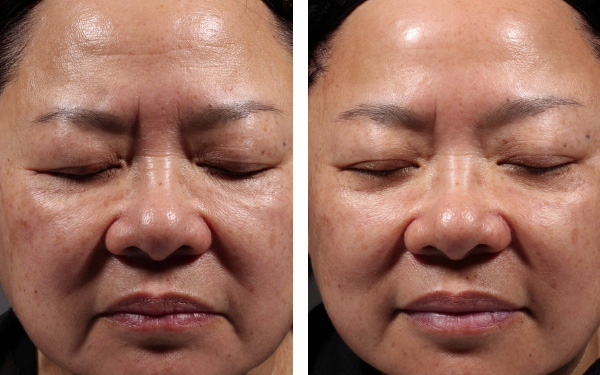
Fine or expression wrinkles
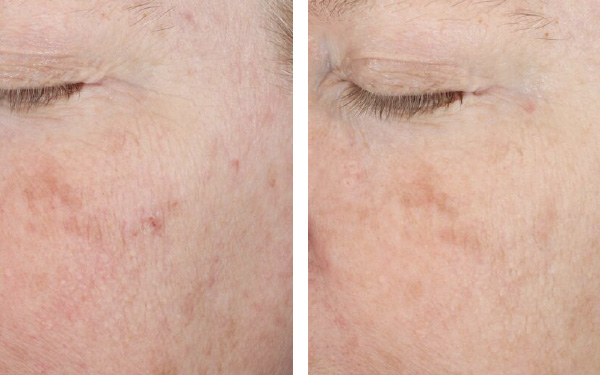
Pigment spots and hyperpigmentation
Visible enlarged pores
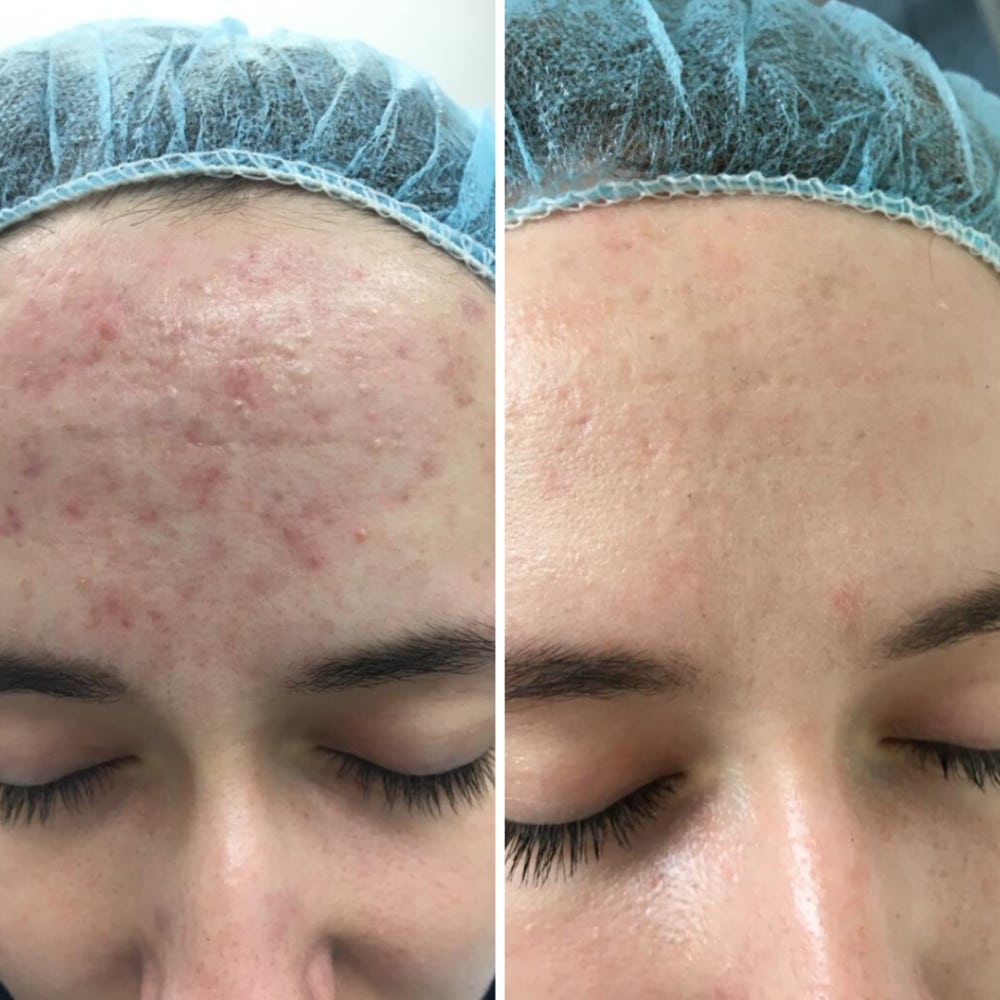
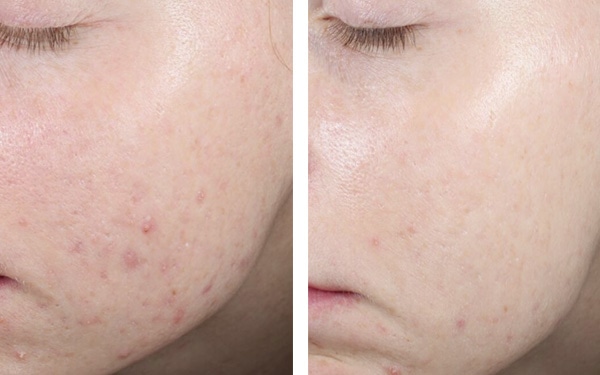
Acne, scars and other imperfections
Oily skin
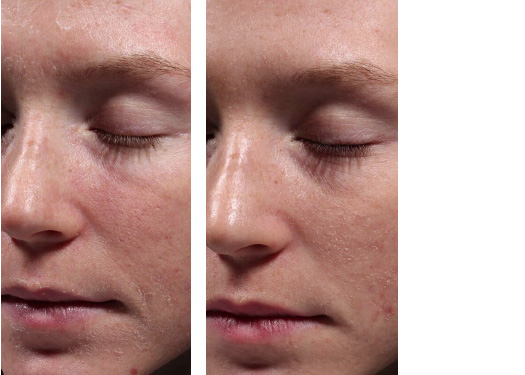
Coarse-grained skin surface
Dehydrated and tired skin
Inconsistent skin tone
A chemical peel is a completely non-invasive procedure used to rejuvenate, brighten, and regenerate the skin on the face. It is used on the neck and décolleté, as well as on the backs of the hands and the back.
This is a very fast and effective method suitable for anyone looking for quick improvements in skin appearance or the reduction of wrinkles.
Great results in just a few minutes
The treatment itself takes only a few minutes, during which a trained nurse applies special cosmetic products containing glycolic acid (AHA) to the skin. These are natural acids that, thanks to their small size, can penetrate even the deepest layers of the skin.
AHA acids are highly effective antioxidants; they help remove dead skin cells, leaving the skin perfectly hydrated, brightened, and supple.
What acids do we use, and how do they work?
Each type of chemical peel uses a different active ingredient—and it is this ingredient that determines how deeply the peel works and which skin concerns it addresses most effectively.
Glycolic acid (AHA) is the most widely used option for both daily skincare and clinical treatments. Thanks to its small molecular structure, it penetrates deep into the skin, where it stimulates collagen production, exfoliates dead skin cells, and provides intense hydration. It works wonders on fine lines, dehydrated skin, and uneven skin tone.
Mandelic acid is a gentler alternative suitable for sensitive or hyperpigmented skin. It has natural antibacterial properties, making it particularly effective for treating acne and enlarged pores.
Trichloroacetic acid (TCA) is used for medium-depth and deep chemical peels. It is effective for deeper wrinkles, acne scars, and deep hyperpigmentation.
Retinol promotes cell renewal and stimulates collagen production. A retinol peel is the ideal choice for mature skin or when the first signs of aging appear.
We use very gentle exfoliants; with some, there isn’t even any visible peeling of the skin (only micro-exfoliation occurs, which isn’t visible but still removes dead skin cells) or irritation.
Treatments tailored to your skin
We determine the most suitable type of peel based on your skin type and specific concerns. During your consultation, we will always inform you of any possible reactions associated with the peel. We classify chemical peels as superficial, medium, and deep, depending on the concentration of AHA acids and the duration of exposure.
The treatment is usually performed over several sessions (3 to 4 courses), during which different types and concentrations of acids are gradually selected based on the results and the skin’s reaction to the previous treatment.
Shallow
Medium-depth
Deep
Mild acne
Fine lines
Deeper wrinkles
Rosacea
Keratoses (actinic and superficial, seborrheic)
Acne scars
Melasma
Melasma
Keratoses (actinic)
Hyperpigmentation (post-inflammatory)
Acne scars (atrophic)
Fine lines
Prevention (of non-melanoma skin cancers)
Actinic damage
This type penetrates to the papillary dermis—0.06 mm. Three to four treatments are recommended.
A medium-depth chemical peel penetrates to the papillary dermis—0.45 mm.
Deep chemical peels penetrate into the mid-dermis—0.6 mm.
Recovery is quick in this case.
Recovery takes 7 to 10 days.
Recovery takes about 2 to 3 weeks.
How do I prepare for a chemical peel?
Proper preparation is the key to the best possible results and a smooth healing process.
One week before your treatment, we recommend:
Avoid prolonged sun exposure and tanning beds.
Stop using products containing retinol or strong acids (AHA/BHA).
Do not undergo waxing or laser hair removal on the treated area.
The day before the procedure:
Moisturize your skin thoroughly.
Do not perform manual exfoliation or mechanical cleansing of the skin.
If you are taking any medications or have an active skin condition, please let us know in advance—we will adjust the procedure to ensure it is completely safe.
Skin Care After a Chemical Peel
After your treatment, proper home care is just as important as the procedure itself. The results you achieve depend largely on how you care for your skin in the days that follow.
The first 48 hours:
Gently wash your skin with lukewarm water and a mild cleansing gel.
Do not apply makeup or strong active products.
Avoid saunas and swimming pools, and do not engage in strenuous physical activity.
Week 1:
Apply SPF 50+ every morning without fail—even in winter and on cloudy days. Skin that has just been treated is significantly more sensitive to UV rays, which can cause hyperpigmentation.
If the skin starts to peel, do not remove it mechanically—let it fall off naturally.
Most clients feel a mild tingling or slight warmth during application—this is a normal reaction to the acids. Superficial peels are virtually painless. With medium-depth treatments, the sensation may be more intense, but it is always manageable without anesthesia.
When are results visible?
The skin begins to visibly improve after the first treatment—usually within 5–7 days, once any redness and peeling subside. Optimal results are achieved after completing the full course of treatment, which consists of three to four sessions at the recommended intervals.
How long do the results last?
It depends on the type of peel, skincare routine, and lifestyle. With regular at-home care and SPF protection, results can last for many months. We recommend 1–2 maintenance treatments per year.
What is the difference between a chemical peel and a laser treatment?
A chemical peel renews the skin using acids that dissolve dead skin cells and stimulate natural processes. A laser works with targeted light energy and is suitable for more specific conditions, such as pigmentation spots or more pronounced vascular changes. Both methods complement each other, and in many cases, combining them is recommended.
Is a chemical peel suitable for men as well?
Yes, chemical peels are equally effective for both men’s and women’s skin. Men most often seek them out to reduce wrinkles, treat oily skin, or address acne scars.
When is a chemical peel not recommended?
We do not recommend the treatment in cases of active herpes, inflammation, or open wounds in the treatment area; while taking certain medications; during pregnancy and breastfeeding; or if you are allergic to any of the peel’s ingredients. We will assess all these factors during the initial consultation.
Perfektní přístup a úžasná péče - na stupnici hodnocení 1-10 bych na základě osobní zkušenosti dala 11👍zejména díky vstřícnému a velmi lidskému přístupu paní doktorky Vykutilové.
... zobrazit vícezobrazit méně
26. 11. 2018
Sona K.
super, jsem spokojena ,
... zobrazit vícezobrazit méně
7. 9. 2019
Katka V.
Byly jsme s dcerou na odstranění molusky a opravdu jsme byly velmi nadšení z přístupu sestřičky a paní doktorky . Sestřička se dceři po celou dobu velmi pěkně věnovala, před zákrokem dceři aplikovala na pokožku krém emla než jsme šly na řadu několikrát za námi sestřička přišla vždy s úsměvem a krásnými slovy .
Zákrok byl velmi rychlý ,dcera ani neplakala ani ji zákrok nebolel.
Velmi si vážíme takového lidského přístupu to se dnes už málo kde vidí.
Děkujeme 😊
... zobrazit vícezobrazit méně
17. 7. 2024
Mili R.
p. Doktorka je 100% profik 👍i když někdy nestíhá 😰je tak skvělý estetik 👍ze to stojí za to čekat 😍nikoho lepšího neznám a to mám velký přehled 😍
... zobrazit vícezobrazit méně
26. 11. 2018
1993
we have been taking care of you for 33 years
5 153+
clients have undergone this procedure
Evaluation of the intervention
4.7/5 - (90 hodnocení)
PRICE LIST
Price of the procedure
The consultation is free of charge if you also undergo treatment during your visit—however, you must book an appointment for the treatment in advance, as it follows immediately after the consultation.