Effective elimination of symptoms after just one treatment
No recovery time
Minimal risk of scarring thanks to a gentle technique
Treatment Description
It's not just an aesthetic flaw
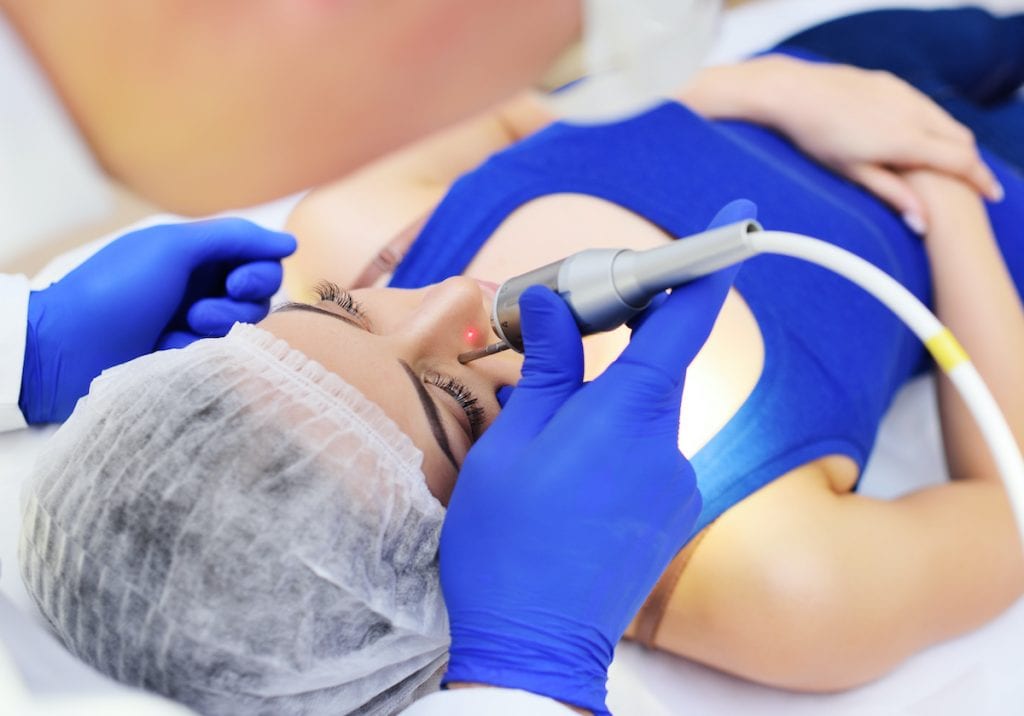
We most often treat skin growths, viral and senile warts, moles, and other cosmetic imperfections using the Fraxis CO2 laser. In some cases, however, surgical removal is necessary—this is usually when a doctor assesses the lesion as dangerous and a histological examination is required.
Skin growths, freckles, moles, and other skin lesions may not only be cosmetic imperfections, but also potential health risks. That’s why it’s a good idea to keep track of your skin growths and moles and know which ones need to be monitored by a specialist.
A dermatoscope can help with diagnosis
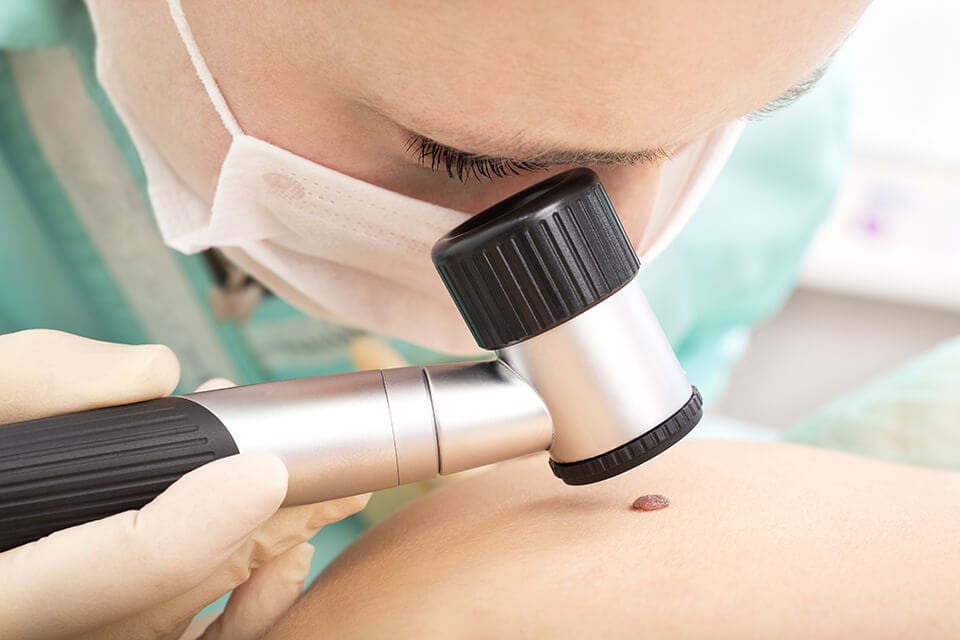
Whether you’re concerned about a raised mole or a small pigmented spot, we’ll first examine it carefully with a dermatoscope. At our clinic, we use the highly advanced and modern VISIODERM handheld dermatoscope, which allows us to examine even the deeper layers of suspicious skin lesions and monitor the development of moles over time. Thanks to this, we are able to identify potential risks and begin treatment early.
Diagnosis using a handheld dermatoscope and the VISIODERM device helps doctors decide whether a skin lesion should be removed or left alone.
Usually 100% removal after the first treatment
Before removing the lesion, the doctor numbs the area, so the procedure itself is completely painless.
During the procedure, the laser beam gradually vaporizes the targeted tissue. After the mole is removed, a scab forms in its place, which should be allowed to fall off on its own.
This precision is particularly useful for viral warts, which tend to be stubborn and often require repeated treatments with conventional liquid nitrogen cryotherapy. The laser targets the affected tissue directly, so in most cases a single treatment is sufficient—even when other treatments have failed in the past.
Fall and winter are ideal for removing moles
Healing takes 1–3 weeks, depending on the size and depth of the lesion. After the scab falls off on its own, a discoloration may remain at the treatment site, which will fade over the course of several months.
After treatment, the scar must be protected from intense sunlight—ideally by using a sunscreen with a high protection factor (ideally SPF 50+). It is therefore advisable to undergo the treatment during the fall or winter.
Mole Removal—It's Not Just About Looking Better
At our clinic, we offer patients a comprehensive approach to every mole. Before deciding how to treat a particular lesion, we examine it thoroughly and assess its potential progression. The cost of laser mole removal therefore includes not only cosmetic treatment but also the removal of a potentially dangerous skin lesion. If you have more than one mole or growth removed at our clinic, you’ll receive a discount on the removal of each additional one.
Laser vs. Surgical Mole Removal: When to Choose Which Method
CO₂ laser treatment is ideal for superficial and cosmetically bothersome lesions that are not suspected of being malignant—such as small raised moles, seborrheic keratoses, viral warts, or skin growths. The procedure is quick (10–15 minutes), healing typically takes 1–3 weeks, and no significant scar usually remains at the site because the tissue gradually vaporizes and the wound heals spontaneously through a scab. A disadvantage is that tissue removed by laser cannot be sent for histological examination; therefore, this method is not suitable for conditions that require further laboratory investigation.
In contrast, we opt for surgical removal via abrasion or excision when we assess a lesion as potentially risky and a histological examination is necessary. During excision, the lesion is cut out and the wound is closed with plastic sutures (which are usually removed on the 14th day); abrasion is used to scrape away superficial lesions. The advantage of the surgical approach is the ability to remove lesions that cannot be treated with a laser and to obtain tissue for laboratory examination; the trade-off is a small scar and a longer healing period with restrictions on sun exposure and physical activity.
Frequently Asked Questions and Answers
How to Get Rid of Moles?
At our clinic, we recommend several methods that allow us to offer comprehensive solutions for various types of moles. These methods have different applications—ranging from removing moles in the hair to pigmented nevi on the back. In addition to laser treatment, we offer abrasion and excision of moles.
Is laser mole removal painful?
Before laser treatment, the doctor numbs the area with an injection of anesthetic, so the laser treatment itself is completely painless.
What should I do after the treatment?
After treatment, the area usually heals within 1–3 weeks. The scab that forms will fall off on its own, revealing a small pink scar in the shape of the original mole, which will gradually fade over the following months. After the scab falls off, protect the scar with a cream that has a high sun protection factor (ideally SPF 50+).
We will provide you with more detailed information during your consultation with our specialist. An examination is absolutely necessary before laser treatment, as not all skin lesions are suitable for laser removal.
Can any birthmark be removed with a laser?
No. We primarily use lasers to treat superficial and cosmetically bothersome lesions that are not suspected of being malignant. If adermatoscopic examination indicates that a mole is potentially risky, we will recommend surgical excision, which allows for subsequent histological analysis of the tissue.
Will there be a scar after laser removal?
After treatment, a scab will form, which will fall offon its own, and a small pink scar in the shape of the original mole will appear in its place. This scar will gradually fade over the following months. For the best possible result, it is important to protect the area from the sun with a high-SPF sunscreen (ideally SPF 50+), so it is advisable to undergo the procedure in the fall or winter.
Obrovské uznání a díky Mudr.Winterové.
Její znalosti mě zbavily pětiletého trápení s kožním problémem v obličeji, který předtím zaměstnal několik specialistů v oboru. Navíc má úžasný přístup a vzácnou empatii. Eva Berková
... zobrazit vícezobrazit méně
23. 10. 2024
Věra Ž.
Skvělá Mudr.Vykutilová,příjemný personál.
... zobrazit vícezobrazit méně
17. 6. 2026
Alena H.
Doporučuji všem všechno, slyšela jsem o vás jen kladné recenze a určitě vás brzy využijí
... zobrazit vícezobrazit méně
24. 3. 2019
Dagmar Š.
Dermaestet je nejlepší klinika v Brně, najdete tam citlivý až familiérní přístup celého kolektivu, zejména vedouci kliniky MUDr Zuzany Vykutilové😊
... zobrazit vícezobrazit méně
7. 9. 2021
Natasa T.
Jsem 💯pro spokojena jak přístupem tak výsledky dekuji paní doktorce Vykutilove a celému timu Dermaestet doporučuji 😊
... zobrazit vícezobrazit méně
18. 5. 2019
1993
we have been taking care of you for 33 years
11 251+
clients have undergone this procedure
Evaluation of the intervention
4.5/5 - (134 hodnocení)
PRICE LIST
Price of the procedure
The price is set per treatment, not per wart. The number of warts that can be removed during a single treatment will be assessed by the doctor on a case-by-case basis based on the clinical findings and discussed with you directly during the treatment. In most cases, a single treatment is sufficient. If any of the treated warts are not completely removed or reappear, a follow-up treatment is free of charge.